

The Human Perception of Chance
Understanding the psychological underpinnings of how humans perceive chance is crucial, especially within the context of a casino environment, and this is where understanding the offerings at slapkong casino becomes particularly interesting. Our brains are not naturally wired to grasp abstract probabilities in a perfectly rational manner. Instead, we often rely on heuristics, or mental shortcuts, which can lead to systematic biases in our judgment of likelihoods.
For instance, the availability heuristic can make us overestimate the chances of events that are easily recalled, such as a big jackpot win seen in advertisements or experienced by a friend. Conversely, the representativeness heuristic might lead players to believe that a recent string of losses makes a win “due,” ignoring the fundamental independence of most casino game outcomes.
Cognitive Biases in Probability Assessment
Several cognitive biases significantly influence how players at a casino, like those at SlapKong Casino, interpret probabilities. The gambler’s fallacy is a prime example, where individuals incorrectly believe that past independent events can influence future outcomes. This is commonly seen at roulette tables, where players might bet on red simply because black has come up several times in a row.
Another bias is the illusion of control, where players feel they can influence random outcomes through skill or superstition, even in games of pure chance. This can manifest as specific betting patterns or rituals intended to “trick” the probabilities into their favor, creating a false sense of agency.
Emotional Influence on Decision-Making
Emotions play a potent role in how probabilities are processed within a casino setting. Excitement and the thrill of potential wins can amplify optimism, leading players to downplay risks and overestimate their chances of success. This emotional state can cloud rational judgment, making it harder to adhere to calculated odds.
Conversely, fear of loss or frustration after a series of defeats can trigger impulsive decisions. Instead of reassessing probabilities objectively, players might chase losses with larger bets, driven by the emotional desire to recoup what they’ve lost, further distorting their perception of realistic probabilities.
The Role of Framing and Presentation
The way probabilities and potential outcomes are presented significantly impacts player perception. Casinos often frame wins in large, attention-grabbing numbers while downplaying the smaller, more frequent losses. This framing can create an illusion of greater winning potential than the actual odds suggest, a tactic often employed by establishments like SlapKong Casino to enhance player engagement.
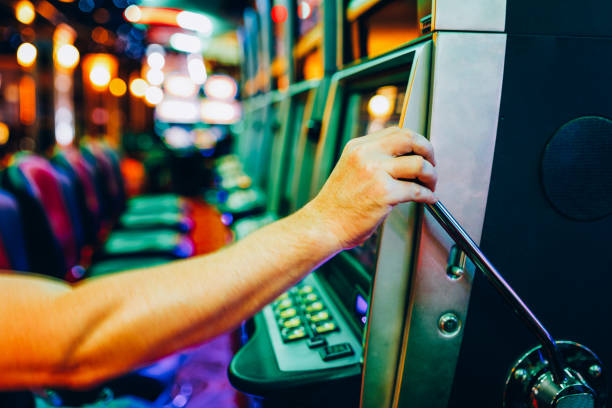
Furthermore, the visual and auditory stimulation within a casino environment – flashing lights, sounds of winning, and celebratory cues – can create an atmosphere of constant potential gain. This can make players more receptive to believing that favorable probabilities are constantly at play, even when the mathematical odds remain consistent.
SlapKong Casino and Probabilistic Awareness
Within SlapKong Casino, as with any online gaming platform, the psychological interplay of probabilities is a constant factor. While the underlying mathematics of games like slots, blackjack, or roulette operate on fixed odds, player perception can diverge significantly. Understanding these psychological tendencies is key for players aiming for a more informed and potentially responsible gaming experience.
SlapKong Casino, by offering a diverse range of games, presents various scenarios where these psychological biases can surface. For example, the allure of progressive jackpots, which have incredibly low probabilities of being won but offer life-changing sums, taps into the human fascination with rare, high-reward events. Recognizing these psychological drivers can empower players to approach their gaming sessions at SlapKong Casino with a clearer understanding of the probabilities involved.